
- About Us
- Events
- Membership
- Fellow Membership
- Reminiscences - Members
- Home
- SACNASP
- Awards
- News
- SA Journal of Chemistry
- Vacancies
- Notices & Announcements
- Chemistry Departments
- Interesting Websites
- Salary Survey

Advertise Here






SACI News January - May 2022
We hope you and your family and friends are safe and healthy. In this newsletter we have news from some of our Sections and Divisions, and prize winners. We congratulate South Africa’s prominent chemists for their wonderful achievements! We also remind readers that the call for the SACI Awards is out and we urge everyone to identify and nominate deserving members for these awards. The prestigious SACI awards aim to recognise and celebrate the contributions of members and chemists at all levels from the senior Gold Medal of the Institute, through to the SACI Postgraduate awards and the Education medal. The call for SACI Fellows is also out and we ask members to please nominate deserving persons. Unfortunately, we have lost some notable chemists: one of our long-standing members, Dr Dave Baldwin; former ACS President, Nancy Jackson; Professor Janet Scott, who was raised and educated in South Africa, and was latterly the Professor of Sustainable Chemistry at the University of Bath; and our SACI Gold Medal winner Professor Tim Egan. We offer our sincere condolences to their families, friends and colleagues.
Keep safe and stay healthy.
Bice Martincigh
Content
-
SACI office address and times
-
Advertising in the SACI newsletter
-
SACI Ties and Scarves
-
Pay your SACI membership fees with SnapScan
-
2022 SACI Awards
-
Call for 2022 SACI Fellows
-
Obituary: Dave Baldwin
-
Obituary: Tim Egan
-
Obituary: Nancy Jackson
-
Obituary: Janet Scott
-
Down Memory Lane
-
Of interest: Prominent South African Chemists
-
Report on 2022 IUPAC Global Women’s Breakfast
-
Play Africa
-
Chemists for Diversity and Inclusivity (CDI)
-
Sections and Divisions News
-
Commonwealth Chemistry
-
RSC News
SACNASP
-
NSTF News
-
AYCN
-
IUPAC News
-
Post-graduate Summer School on Green Chemistry
-
FASC News
-
Global Young Academy of Science
-
CAIA Newsletter
-
New Chemistry Textbook
-
Book on Green Chemistry
-
Special issue of the Philosophical Transactions of the Royal Society A
-
Polytop Vial Storage Trays for Sale
-
South African Journal of Chemistry
-
African Journals of Chemistry
-
SACI and SACI-related conference events
-
Other Conferences
-
GC and GC-MS online training courses – NMISA
-
Vacancies
SACI office address and times
The SACI office, run by Laila Smith, is located in the Chemistry Department, Wits University, 1st Floor Humphrey Raikes Building. The telephone number is 011 717 6705 and e-mail address is: saci.chem@wits.ac.za. The cell phone number is 061 282 3477.
Office hours are from 8.30 am till 1.00 pm. Laila can be contacted at any time during her office hours.
Advertising in the SACI newsletter
The newsletter provides a means of getting messages to our membership. Currently the SACI membership stands at over 1000. This newsletter thus provides a means of advertising employment opportunities, conferences and workshops, and even for companies/Universities to promote themselves. We encourage members to use the Newsletter for advertising purposes. All SACI related conferences and events are advertised for free; if not a SACI related event there could be a small charge. For advertising costs contact Laila at the SACI office.
SACI Ties, Scarfs and T-shirts
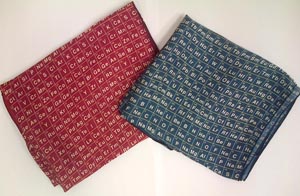
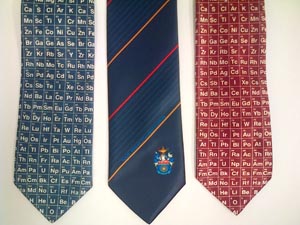
Periodic table ties and ladies scarfs R130 each.
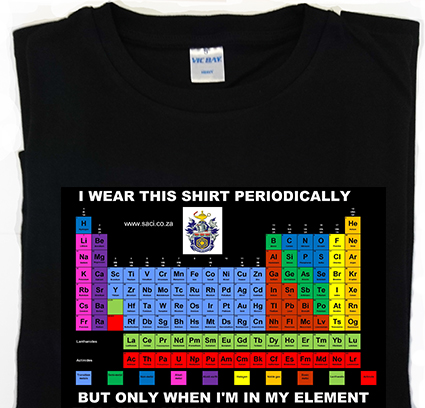
Periodic table T Shirt Short sleeve R180, Long sleeve R200
Please contact head office to place orders.
There is also a courier charge of R150 per order for delivery.
Pay your SACI membership fees with SnapScan
For those wishing to pay via credit card please let Mrs Laila Smith know so she can generate an online payment and email you a link.

SACI Awards 2022
THE GOLD MEDAL
The medal shall be known as the Gold Medal of the South African Chemical Institute. The medal is gold-plated and bears the Institute’s name and crest on the obverse, and the name of the medal, together with the name of the recipient and the date on the reverse. The award shall be made to a member of the Institute in good standing, whose scientific contributions in the field of chemistry or chemical technology are adjudged to be of outstanding merit. The medal shall be accompanied by a monetary award to the value of R10 000, together with a suitably inscribed scroll.
THE RAIKES MEDAL
The medal shall be known as The Raikes Medal of the South African Chemical Institute. The medal is gold-plated and bears a likeness of Humphrey Rivaz Raikes with his name on the obverse, and the Institute’s name and crest, and the name of the recipient and the date on the reverse. The award shall be made to a member of the Institute, in good standing and under the age of 40 on 31 December in the year of the award, whose original chemical research shows outstanding promise, as judged by the person’s publications in reputable journals. It is further stipulated that the research shall have been performed in South Africa. The medal shall be accompanied by a monetary award to the value of R2 500, together with a suitably inscribed scroll.
THE CHEMICAL EDUCATION MEDAL
The medal shall be known as the Chemical Education Medal of the South African Chemical Institute. The medal is struck in silver and bears the Institute’s name and crest on the obverse, and the name of the medal, together with the name of the recipient and the date on the reverse. The award shall be made to a member of the Institute, in good standing, who has made an outstanding contribution to chemical education, as judged by the person’s published work in the previous five years. Published work may be in any form and may be related to any level or educational context. The medal shall be accompanied by a suitably inscribed scroll.
THE SACI POSTGRADUATE MEDALS
The medals shall be known as the Postgraduate Medals of the South African Chemical Institute. The medal is struck in silver and bears the Institute’s name and crest on the obverse, and the name of the medal, together with the name of the recipient and the date on the reverse. The awards shall be made to student members of the Institute engaged in, or who have recently completed, research towards a MSc or PhD degree in a School/Department of Chemistry at a South African University, or a MTech or DTech degree in a School/Department of Chemistry at a South African University of Technology. Graduates who apply must have graduated in the period June 2021 to May 2022. The number of medals shall not exceed five per annum, and the medals are limited to one per institution. The recipients of the medals shall be known as The SACI Postgraduate Medalists. Past SACI/Sasol Postgraduate Awardees are not eligible for nomination for a second award. The medal shall be accompanied by a suitably inscribed scroll.
The persons nominated should be considered as being “young innovative chemists”. The characteristics of such a person are:
1. Innovation
2. Independence
3. Enterprise.
The selection criteria applicable to the award are:
1. Has the candidate done something worthy of admiration in the experimental field (e.g. a new, noteworthy, experimental design)?
2. Has the candidate communicated the experimental results in any useful way (in printed form, or at conferences or symposia)?
3. Does the candidate have a broad appreciation of the role and context of chemistry as a science?
4. Does the candidate play a productive role in his/her chemistry department?
The persons submitting the nominations shall supply complete curricula vitae of the candidates, detailing all academic achievements. The group of people nominating a candidate must be able to assess the impact the nominee has made in his/her department. Hence, a combined process of peer and supervisor review should inform the selection of the candidate. In addition to the backing of the supervisor, the candidate shall require the support of at least one other member of staff of the Department. The candidate must also enjoy the support of a number of fellow postgraduate research students. All the support for a candidate must be submitted in writing. The endorsements should mention how the candidate reflects the qualities enumerated in the list above. Final endorsement may reside with the Head of Department, where appropriate.
PROCEDURE FOR NOMINATION/APPLICATION
The merits of the work of candidates may be brought to the notice of the Council either by persons who desire to recommend candidates (nominations) or by the candidates themselves (applications).
Nominations and applications should be received by the Institute not later than 31 May 2022. Applicants must provide a list of publications, and/or non-confidential internal reports and other appropriate information in support of the application, together with curricula vitae detailing all academic and professional achievements. In the case of the Raikes Medal, three reprints of each of those publications considered to represent the candidate’s most significant work must be submitted. In the case of the Chemical Education Medal, copies of the publications to be considered, together with any explanatory or supporting material, must be submitted.
Each nomination or application should include the names of two persons with knowledge of the candidate’s work, to whom reference may be made by the Institute.
Further details on these awards and the particular nomination requirements can be found at the Institute’s website: www.saci.co.za.
The Council may at its discretion suspend any or all of these awards in any year in which there are no suitable candidates.
Past medalists are ineligible for nomination for a second award of any of the above medals.
PLEASE REMEMBER TO SUBMIT YOUR NOMINATION(S)!
Call for 2022 SACI Fellows
The call for nomination for SACI Fellows is open. We encourage all members to identify and nominate worthy candidates for consideration for this membership category in 2022.
The Fellows membership category is the senior membership level of the Institute and is granted to members in acknowledgement of their outstanding contributions and services to chemistry.
The nominee must be a current full SACI Member in good standing with the Institute and have been a member of the Institute for at least ten years. In addition, candidates must have demonstrated excellence and leadership in the areas of both: (a) the profession, education and/or management of chemistry, and (b) volunteer service to the chemical community.
In terms of (a) above this may include:
• outstanding and creative contributions to scientific research
• superior achievements in the teaching and learning of chemistry
• strong, effective leadership or managerial excellence in an organization within the chemical enterprise
And for (b):
• outstanding leadership of a division, local section, regional meeting, national meeting and/or international conference
• exceptional assistance, as an unpaid volunteer, in the publication of scientific information (not including routine authorship or reviewing publications associated with one's own research)
• organization of especially significant symposia, major presentations, or other programmes at national/international meetings
• leadership or other outstanding contributions in effective communications to public outreach activities
• effective communication to the public of the value of the chemical sciences or the chemical profession through the press, radio, TV, or other electronic media.
The proposer—or in case of self-nomination, the nominee—completes the online application form on the SACI website and uploads a comprehensive CV. The proposer and seconder are required to submit their motivations for the nomination via the online nomination system. All of these requirements must be completed by 31 May 2022.
Link to the online application: http://www.saci.co.za/apply_for_fellowmembership.html
(your member login details will be required)
Contact Laila if you have a problem with your log in details – laila.smith@wits.ac.za
Obituary: Dave Baldwin
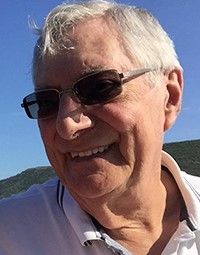
Dave Baldwin joined SACI in 1972 and this year would have been a member for 50 years! He was a Life Member of SACI and was involved with the organisation of the first SACI Inorganic Conference. He also gave lots of talks on swimming pool chemistry in Gauteng and was involved with writing legislation for waste disposal in SA.
Neil Coville
It was with great sadness that the chemical fraternity learned of the death on 5 January 2022 of David Arthur Baldwin at his home in George, aged 79.
Dave Baldwin was an inorganic chemist, having graduated with BScHonours (1964) and PhD (1967) at the University of Manchester in England. He spent two postdoctoral periods, 1967-1969 at the University of Washington, USA, and 1969-1970 at University College, London. His first appointment was as a lecturer at the University of the Witwatersrand. He and I joined Wits together in September 1970, having met on the Edinburgh Castle en route from Southampton to Cape Town. Our head of department, the late Felix Sebba, had alerted Dave to the fact that his family and mine would be travelling on the same voyage, so Dave was primed to look out for me. We were 24 hours into the voyage when we first met, and that was our first opportunity to raise a glass together. It was not the last.
Dave proceeded through the ranks at Wits, being promoted successively to senior lecturer and associate professor. He worked closely with the late John Pratt in the area of bioinorganic chemistry, and graduated a number of MSc and PhD students. Most notably, he was responsible for the start of the academic careers of Helder Marques and Tim Egan.
In 1986 Dave left academia and became programme manager of the Materials Science Division of the CSIR in Pretoria, where he remained until 1990. This experience prompted him to branch out into consultancy, initially with Waste-Tech (Pty.) Ltd. and later with Environmental and Chemical Consultants (En-Chem Consultants c.c.), specializing in the areas of waste management and environmental issues. He had been director of En-Chem Consultants since 1998.
Dave and Julia had always been partial to the Western Cape, and it was no surprise when, in 2005, they migrated to George, where they settled.
Dave was a most agreeable companion, and his many friends in chemistry will recall with pleasure his convivial presence at many social events.
He is survived by his wife, Julia, and sons Richard and Michael, to whom we extend our sincere condolences on their loss.
Tony Ford
Durban
24 January 2022
Obituary: Tim Egan
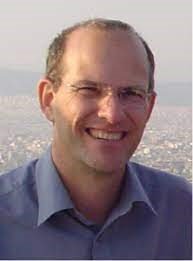
Dear SACI members
We have just received the sad news that after a battle with cancer, Prof. Tim Egan (from UCT) has passed away over the weekend.
Tim’s passing will leave a big hole in the international and broader South African chemistry community, and his loss will be felt within the Western Cape and Inorganic chemistry communities. Tim was a stalwart in the SACI community too – for example, he received the SACI Gold Medal in 2016 and was elected as a SACI Fellow in 2019.
Our thoughts are with Tim’s wife, Joanne, his family and his UCT colleagues during this very difficult time.
On behalf of SACI EXCO,
Prof. Willem A.L. van Otterlo (SACI-President)
In remembrance Professor Timothy Egan 6 May 2022
It is with a great deal of sadness that we convey the news of the passing of our colleague, Professor Timothy Egan (60), on Sunday, 1 May 2022.
Professor Egan started his academic career in the Department of Chemistry at the University of Cape Town (UCT) in 1996. He obtained his PhD from the University of the Witwatersrand in 1988, with subsequent post-doctoral and research associate positions in the Department of Physiology and Biophysics, Albert Einstein College of Medicine, New York, USA and the Department of Chemical Pathology, Institute of Child Health and the Red Cross War Memorial Children’s Hospital.
He had a distinguished academic career at UCT, rising to the rank of Professor and Chair in Inorganic Chemistry. This year, he was awarded an A-rating by the National Research Foundation (NRF).
He was an excellent teacher and was recognised with the university’s Distinguished Teachers Award. He was an outstanding researcher, with his national and international standing as a leader in his field widely acknowledged. He was, inter alia, a Fellow of UCT and of the South African Chemical Institute (SACI), a recipient of the SACI Gold Medal, and a fellow of the Japan Society for the Promotion of Science.
He had over the years at UCT established and maintained a research group devoted to the broader cause of combatting the scourge of malaria, and more specifically to improving the understanding of hemozoin formation in malarial parasites, and confirming the fact that hemozoin remains a very important target of anti-malarial drug design, and the mechanism of action of such drugs.
He will be remembered by his colleagues and students as a principled, compassionate man as well as a clear thinker with a meticulously rational approach to everything he did – including his teaching, research and his service and leadership roles in the university and the broader community of chemists in South Africa. He believed in the power and integrity of science, and indeed lived his life by its principles and applied these to problems and challenges beyond the bounds of his professional interests.
He will also be remembered as a loyal and gentle friend, someone who always had time to sit and talk and listen to colleagues, work associates, students or anyone, whether it was to simply talk about interesting ideas or to deal with a grievance or to impart advice or wisdom.
Professor Egan is survived by his wife, Joanne.
His funeral is still in the planning stages and further details will be provided on the UCT Department of Chemistry website in due course.
The university is in contact with the Egan family and has reached out to offer support during this time of grief. We convey our heartfelt condolences to the family, friends and all who knew Professor Egan.
Sincerely
The UCT Executive
Obituary: Nancy Jackson
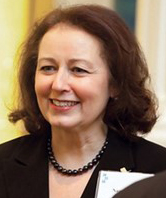
We all remember Nancy. She was the ACS President who recognized FASC and was also instrumental in getting SACI linked to ACS. Her first act for FASC was to give her ACS budget $5 000 that she could use as ACS President to support Young Chemists attending the FASC General Assembly in 2011. So the current ACS support for FASC comes from that kind act. So when Miranda Wu became ACS President in 2013 and signed the SACI-ACS MoU in New Orleans and Durban, she was indeed following up on the SACI-ACS friendship that was started by Nancy.
I am very saddened. May Her Soul Rest in Peace!
Regards,
Prof James Darkwa
Nancy B. Jackson, former president of the American Chemical Society, dies at 65
The society’s first Native American president promoted chemical nonproliferation and supported marginalized chemists
by Alexandra A. Taylor
January 10, 2022
Nancy B. Jackson, former president of the American Chemical Society, died Jan. 3 at age 65 in Albuquerque, New Mexico. Jackson served as ACS president in 2011, declared by the United Nations to be the Year of Chemistry.
Jackson earned a BS in chemistry from George Washington University in 1979. After college, she worked in the ACS education division before leaving to pursue chemical engineering at the University of Texas at Austin. She earned an MS in 1986 and a PhD in 1990.
In 1991, she started a decades-long career at Sandia National Laboratories, first as an energy researcher, then as manager of the Chemical and Biological Sensing, Imaging, and Analysis Department, and later as deputy director of the International Security Center. She retired from Sandia in 2017 as a Distinguished Member of Technical Staff.
Jackson had Seneca heritage and served for 2 years as Sandia’s tribal government liaison. She worked with tribal colleges to expand their science programs and helped support marginalized students in science, technology, engineering, and math through the Science and Technology Alliance. In 2005, she received the American Indian Science & Engineering Society’s Professional of the Year Award.
Jackson was the founder and manager of the International Chemical Threat Reduction Department in Sandia’s Global Security Center. She worked with the US Department of State to establish the Chemical Security Engagement Program, aiming to reduce the threat of the misuse of chemicals by raising awareness of chemical safety internationally. In 2012, she received the AAAS Award for Science Diplomacy for her involvement in the program and for “developing, nurturing, and advancing careers of scientists worldwide, with a special emphasis on women scientists in the Middle East and Southeast Asia.” In 2014, Jackson was named a Franklin Fellow by the US Department of State.
During her time in the ACS presidential succession, Jackson worked to expand the society’s international collaborations and traveled extensively to meet with chemists and chemical engineers, in particular women.
“The firmament of chemistry has lost one of its brightest stars. As ACS president, Nancy focused on member needs wherever they were. She hugely increased ACS’s visibility and partnerships around the world,” says Madeleine Jacobs, former CEO of ACS. “She was a brilliant, vivacious, funny, and empathetic chemist. She will be greatly missed.”
Jackson is survived by her husband, James Miller, and her sons, Christopher Miller and Jackson Miller. Gifts can be made in Nancy Jackson’s name to the ACS Scholars Program at www.acs.org/donate.
Chemical & Engineering News
ISSN 0009-2347
Copyright © 2022 American Chemical Society
Obituary: Janet Scott
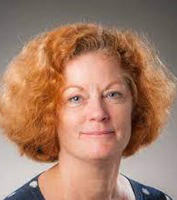
Janet Scott (April 1964 – 23 January 2022) was a South African chemist who was Professor of Sustainable Chemistry at the University of Bath. She also worked as the Director of the Engineering and Physical Sciences Research Council Centre for Doctoral Training in Sustainable Chemical Technologies. She studied Chemistry and Applied Chemistry at the University of Natal in Durban. She moved to the University of Cape Town as a graduate student, where she earned a master's degree and a doctorate. Her doctoral research considered cholic acid and methyl cholate. Janet joined the faculty at the University of Cape Town in 1992, where she worked until completing her doctorate in 1995. She joined the Fine Chemicals Corporation in South Africa in 1996. She moved to Monash University in 2000, where she worked as deputy director of the Australian Research Council Centre for Green Chemistry. In 2006 she was appointed a Senior Marie Curie Fellow at Unilever. In 2010, Janet joined the Department of Chemistry at the University of Bath. Her research considered renewable raw materials for the development of sustainable products. In 2011, she developed a biodegradable microbead that could be used to replace dangerous plastic microbeads. She was particularly interested in making microbeads from cellulose, an abundant natural material that does not derive from fossil fuels. For several years she developed a reliable, scalable strategy to generate cellulose microbeads. She was made Reader in Sustainable Chemistry in 2016 and a Professor two years later. Scott launched Naturbeads, a spin off company for cellulose microbead generation, in 2018. Naturbeads was supported by Innovate UK and Sky Ocean Ventures. She had edited two books with former SACI President, Trevor Letcher, and in 2014 was a keynote speaker at the 5th International IUPAC Conference on Green Chemistry held in Durban, in August 2014, where she presented a talk entitled: “Cellulose based sustainable materials for diverse applications in energy storage devices, electronics and fast-moving consumer goods”.
With acknowledgement to Wikipedia
The University is saddened to announce the death of Professor Janet Scott
The University is saddened to announce the death of Professor Janet Scott. Professor Scott joined the Department of Chemistry in 2010, initially as a Group Leader and training director within the Centre for Sustainable Chemical Technologies, then from 2016 as a Reader in Sustainable Chemistry, with promotion to Professor following in 2018.
During her time at Bath, Janet had a strong portfolio of research grants from industry, EPSRC, Innovate UK and EU. She had a very strong international research profile in the area of sustainable chemical technologies and she was instrumental in developing the University’s Integrated PhD in Sustainable Chemical Technologies as well as the joint PhD programme with Monash University in Australia, where she had previously been a senior lecturer.
Professor Scott was originally from South Africa and received her PhD from the University of Cape Town. She worked in academia and industry during her career in South Africa, Australia and the UK.
This background was a strength when it came to designing research projects and bringing together colleagues from diverse fields to collaborate on solving problems and addressing challenges.
Her primary research interest was in the use of renewable raw materials in developing useful products. This helped lead to the creation of Naturbeads, a start-up company formed in 2018 with her colleagues Davide Mattia and Giovanna Laudiso, to develop biodegradable microbeads to replace plastic ones in a wide range of consumer goods.
Janet left the University in the summer 2020 due to ill health. Senate conferred the status of Professor Emeritus on her when she left the University.
Professor Andrew Burrows, Head of the Department of Chemistry, said: “Janet was a great person to have in the department. She was incredibly effective in both her work with the CDT and as a professor, and was someone who would just get things done. She took no nonsense from staff or students and had a knack of asking perceptive questions, seeing to the heart of an issue.”
Professor Davide Mattia said: "I started working with Janet about 10 years ago and I was immediately struck by her encyclopaedic knowledge of chemistry and sustainability. As we became friends, I discovered this extended into plants, food, travel, books, walks...pretty much everything!
“Janet has provided a fundamental contribution to the University becoming a world-leading centre in sustainable technologies and she has made a positive difference in the life of many students, colleagues and friends around the world. She will be very much missed."
Professor Matthew Davidson said: “Janet was the most wonderful colleague, collaborator and friend. Her influence on the development of sustainable chemical technologies at Bath has been profound. Whether it was writing a grant proposal in the early hours, meeting with CDT students or sharing a good meal, her enthusiasm and dynamism cut through and we always had fun. She cared passionately about people, science and natural justice - a combination that touched the lives of so many colleagues, students and collaborators. We will all miss her deeply and remember her fondly.”
With acknowledgement to the University of Bath Communications
Down Memory Lane
To add to the history of SACI it was decided to get some of the older SACI members to relate about their experience of SACI in years gone by me. To do this a letter was sent out to the SACI membership form the then President, Prof Vincent Nyamori, in late 2017. The letter requested that those members with 40 + years of SACI membership write a few paragraphs on their remembrance of SACI in times past.
For a variety of reasons, these anecdotal comments are only now being collated in mid-2020. These remembrances of times past provide a small window on the times that the members recollect. Below are listed (virtually unedited) the comments from these members.
If there are any others who would still like to add to this article please do so. Send your information to me.
Prof Neil Coville
July 2020
The letter of invite
Dear SACI Member
You have been a SACI member for over 40 years. We are trying to record some early history of SACI. Could you write a paragraph for us (10 lines; or longer) on (i) an early memory relating to SACI and (ii) what you doing now.
Thanks
Prof Vincent Nyamori
Response from Mr John Hofmeyr
History
Memories are vague, but I seem to recall a close association between SACI and the AS&TS. I recently binned my green AS&TS membership card, dated 1969, I think. It was made of cardboard and laminated with thin fibres of coarse-weave fabric for durability and bore a (stamped) signature of the President. I seem to remember attending meetings (a) in the Johannesburg CBD, maybe on Hollard St, and (b) in a pale green and beige building on the south side of Jorissen St, I think, in Braamfontein. I don’t recall whether they were meetings of SACI or AS&TS.
Anecdote 1:
Several years ago, SACI wrote to me with congratulations for qualifying for life membership because I had been a SACI member for more than “X” years. I forget the number; I think that I became a student member during my second year at Wits, 1969, aged nineteen. Hot on the heels of that missive came a rescission with an apology; I was still way short of the other criterion – being over 70 years old!
Anecdote 2:
The late Prof. Pierre Faure and I were both members of Parkview Golf Club. One of the club’s festivities was the “on-the-spot” draw for a small monetary prize for a lucky member who was present in the pub at the time. On one occasion I delayed my arrival for a SACI meeting in order to be present for the draw. Pierre (being far more disciplined than I) abandoned the club to avoid tardy arrival at SACI. Unluckily for him, his name came out of the hat in his absence. What cruel misfortune!
Current activities
During my years working for Union Carbide in the 1970s and 1980s, I became interested in molecular sieve zeolites. Aspects of surface chemistry in porous materials gained a new lease on life when, about 15 years ago, I became interested in biomass-based charcoal when used as a soil amendment. In that application the material is called “biochar”. It has many edaphic attributes but three stand out:
-
moisture-retention (adsorption / desorption)
-
cycling of nutrients in plant-available form (also by adsorption / desorption)
-
provision of a protective habitat for microorganisms, especially mycorrhizae
Some of my quasi-academic thinking is published on the ResearchGate website. To date my work is self-funded and currently stalled.
SACI Statement on Tertiary Training in Chemistry
Statement from SACI Council on tertiary training in chemistry as a result of disruptions to the 2020 academic year due to the COVID-19 pandemic.
As the professional body representing the interests of all chemists in South Africa, we recognise the challenges that the current COVID-19 crisis presents to all our members in academia, research and industry. We also acknowledge the challenges the current situation presents to our tertiary institutions and specifically the challenges presented by moving to online teaching. We applaud the efforts of all our members who work at tertiary institutions who have adapted and innovated to ensure that we can continue as far as possible with our teaching and learning of chemistry even when on campus face-to-face contact is not possible. Our tertiary institutions play a critical role in not only training the next generation of chemists, but they are also tasked with the important responsibility of ensuring that many people from other professions and disciplines are trained in the fundamental principles of chemistry.
We reaffirm our belief that this training is essential, as chemistry is one of the central sciences. Key to this training is the practical component and laboratory based skills development. While we accept that this critical component of our training is not possible under the current situation, we strongly urge that plans be put in place to preserve this component of training as part of the curriculum as far as possible. In some cases, virtual laboratory tools can facilitate learning, but we believe that “in laboratory practical training” particularly for senior level courses should be preserved. SACI strongly recommends that at least a critical minimum practical experience should form part of the plans to complete the 2020 academic year at our tertiary institutions. We believe that this is essential to preserve the validity and integrity of the academic training programmes in chemistry.
-
Statement issued on behalf of the SACI Council, June 2020.
Professor Peter Mallon
President of SACI
Of interest: Prominent South African Chemists
We congratulate our members who feature in this list of prominent chemists! Well done!
The ranking is constructed using the H-index data gathered by Microsoft Academic and includes only prominent scientists with an H-index of at least 40 for scientific papers published in the field of Chemistry.
You can see the full world ranking here: https://research.com/scientists-rankings/chemistry
You can find the entire ranking for South Africa here: https://research.com/scientists-rankings/chemistry/za
Report on 2022 IUPAC Global Women’s Breakfast
The Global Women’s Breakfast (GWB) is an annual event organised by the International Union of Pure and Applied Chemistry (IUPAC). This is a yearly event that coincides with the UN’s Day of Women and Girls in Science. Across the globe women and men from all types of science organisations come together to share breakfast either virtually or in person. The purpose is to celebrate Women in Science and to inspire the younger generation to pursue careers in science. The overarching theme for these events is "Empowering Diversity in Science". The GWB events facilitate the formation of communities on a local, regional and international scale to effectively share ideas and strategies for progress. The GWB event in South Africa (GWB2022, SA Edition) was held on 16th February 2022, 10h00-12h00. The event exploded into a wonderfully collaborative effort with organisers from across the country - Wits, UKZN, CPUT, Univen, Rhodes, UJ, representing the various sections of the South African Chemical Institute (SACI). GWB2022 (SA Edition) was generously sponsored by Pearson and Elsevier who donated several prizes for the event. It was inspiring to have over 200 registered delegates from across the world join GWB2022 (SA Edition)! We have delegates from India, Finland and Turkey. From Africa, we welcomed delegates from Nigeria, Kenya, Zimbabwe, Morocco, Egypt and Lesotho. We were also joined by industry reps such as Sasol, Microsep, Separations and others. But we were most excited by some very special NPC audience guests: Play Africa and SANGO who are each doing amazing STEM promotion in the country. Our 2022 opening message was from SACI President Prof. Willem van Otterlo and our invited guest speaker was the esteemed Prof. Catherine Ngila (Acting Executive Director: African Academy of Sciences). Her talk focused on the gender gap within STEM and particularly on the number of women in academic positions. This opened up for a fruitful discussion between those in attendance, which was followed by a panel discussion facilitated by Prof Rosa Klein, HOD Chemistry at Rhodes University. The panel consisted of Prof Kriveshini Pillay (UJ), Dr Roseanne Diab (GenderInSite), and Ms Dorothy Ngila (NRF).
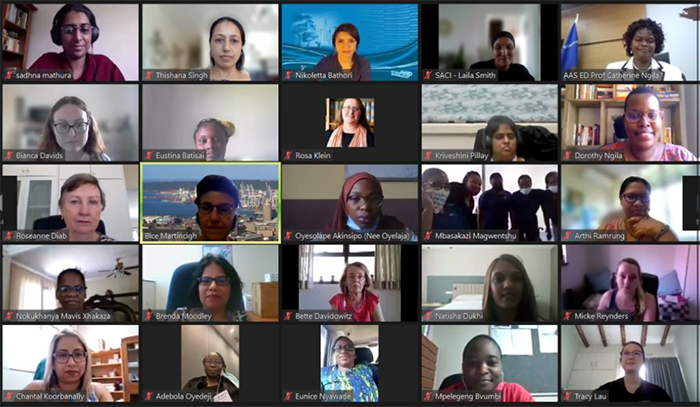
Dr Sadhna Mathura and Bianca Davids
Save the Date for #GWB2023 “Breaking Barriers in Science” on February 14, 2023!
Links: https://iupac.org/gwb/
Play Africa
Play Africa is an NPC that promotes STEM. They were part of the local IUPAC Global Women's Breakfast event held in February. Part of their STEM promotion involves having women academics talk about their work and demonstrate a short experiment to get children interested.
Play Africa, an innovative children’s museum at Constitution Hill in Johannesburg, has launched a new early childhood curriculum called STEM Seeds. The curriculum empowers teachers to incorporate playful STEM learning in their classrooms using everyday recycled materials. You can download the free curriculum from Play Africa’s website www.playafrica.org.za. Focusing on the playful classroom and the playful educator, STEM Seeds helps educators to teach and discuss STEM and climate change in age-appropriate ways. It’s packed with ready-to-use techniques and activities, including Daily Techniques to Encourage STEM Skills and Daily Techniques to Increase Playful Learning. No special equipment is required to implement the STEM Seeds curriculum. It’s also been designed to work alongside South Africa’s National Curriculum Framework for Children from Birth to Four Years (NCF) and the Curriculum and Assessment Policy Statement (CAPS). STEM Seeds supports the development of key skills from both documents. The research is clear: meaningful, interactive play is the best way for children to become ready for school. Play Africa helps every teacher begin child-led inquiry through play, without focusing on academics and memorisation before they are ready. Kick off a future of lifelong learning with STEM Seeds! Some of our videos: https://playafrica.org.za/women-in-stem/.
Dr Sadhna Mathura
Chemists for Diversity and Inclusivity (CDI)
SACI introduces a new forum: the CDI
The South African Chemical Institute has launched a new initiative: . The aim of this forum is to promote discussion around diversity and inclusivity within the Chemical Sciences. SACI is committed to nurturing the values of diversity, inclusivity and equity in the chemical sciences and opposes discriminatory acts or threats of any kind. Consequently, SACI will continue to play a leading role in assuring the professional competence and integrity of chemists and fostering international collaboration whilst upholding inclusivity and diversity. From this standpoint, the CDI arose to lead this conversation from the South African context.
The current CDI team include Dr Sadhna Mathura (Chair), from Wits University; Prof. Bice Martincigh (Vice Chair), from UKZN; Prof. Nikoletta Báthori (Secretary/Treasurer) from CPUT and Ms Bianca Davids (Student Representative) from Wits University and assisted by Ms Laila Smith (SACI Administrator). We hope to facilitate many interesting conversations in the future by way of lectures, panel discussions, workshops and so on. To that end, do feel free to email SACI with any suggestions and comments of what types of activities you would like to see as part of the CDI’s contributions.
The CDI inaugural event held on 28 October 2021 5-6pm SAST, was an online conversation with the president of the RSC, Prof. Tom Welton, OBE. Prof. Welton is the first Professor of Sustainable Chemistry and is currently at Imperial College London.
Sections and Divisions News
-
Organic Chemistry Division
The Organic Chemistry Division of the South African Chemical Institute (SACI-OCD) invites PhD students working on organic chemistry projects to participate in the year- long 2022 Organic Chemistry PhD Seminars (online presentations).
Since the onset of the COVID-19 restrictions in 2020 there have been limited opportunities for postgraduate students to discuss their projects nationally. In the case of PhDs the SACI-OCD believes that this creates a stunting “echo chamber” in the development of prospective researchers to reinvigorate the discipline.
In the last two (2) years online presentations have become more common place and present a unique opportunity for PhD students to expose and explore the strengths and weaknesses of their work outside the “supervisor’s voice”. The SACI-OCD believes this will encourage growth and diversity of experience for students pursuing PhD study in organic chemistry in South Africa.
Please contact Clinton Veale VealeC@ukzn.ac.za if you are interested in participating in these seminars.
-
Industrial Division
The Industrial Division held a very successful webinar on 30 March in which presentations were given by two SACI Chemists, with a wealth of experience in their chosen fields of work. The two presenters were Xolani Nocanda, Scientist at eThekwini Municipality Water & Sanitation Division, who presented a talk entitled: "A Chemist in Water and Sanitation", and Alida-Louise Fourie-Henning – Senior Chemist at Impala Platinum Ltd, Refineries who spoke on: “A day in the Life of a Chemist at a Platinum Refinery”.
The webinar was particularly useful to SACI student members as it gave them an insight into what Chemists actually do in industry.
It is envisaged that the Division will hold regular presentations in the future to assist students in their chosen careers, and give them an opportunity to ask questions to Industrial Chemists. Please keep an eye out for future announcements.
-
ChromSA
Piet de Coning was announced as the recipient of the prestigious Chromatographer of the Year award for 2021 in the categories General contributions to promote Chromatography in South Africa, Publications of applications of new chromatographic techniques and Publications of established chromatographic technique applications.
Piet, a trained Biochemist with a Master’s degree based on chromatographic method development, has been involved for many years in the chromatography world where he has developed new methods, written a number of publications, served as a reviewer for the Journal of Chromatography A, as well as co-authoring a text book titled “A practical guide to Gas Analysis by Gas Chromatography” to name but a few of his accomplishments. He has also trained countless students through the years on various chromatography techniques.
On behalf of ChromSA, congratulations to Piet on this achievement! The award will be formally made to Piet at a ChromSA function this year, the date and details of which will be communicated shortly.
Belinda Hickman Mosdell
ChromSA Chair
 de Coning.jpg)
Johannes Petrus (Piet) de Coning
Piet graduated in Biochemistry from the Randse Afrikaanse Universiteit (now University of Johannesburg) and then joined the Medical University of Southern Africa (now Sefako Makgatho Health Sciences University) in 1982 in the Department of Chemical Pathology. Apart from teaching duties he developed specific Chromatographic and GC/MS methods for clinical analysis. His Master’s thesis in 1996 was about a highly specific method for the early detection of tuberculosis markers using Electron Capture GC, as well as EI and Negative Ion Chemical Ionisation GC/MS and GC/MS/MS.
He joined Pelindaba Analytical Labs at NECSA (South African Nuclear Energy Corporation) in 2000 where he developed methods for the analysis of fluorinated gases and fluorinated organics. Much of the valve systems required for the safe handling of these highly corrosive gases had to be developed from scratch and the certification of the electronic grade fluorinated gases produced by NECSA required ultra-trace analyses of impurities in these gases. Since it was produced for the export market it also required internationally acceptable quality control measures and uncertainty estimations.
In 2007 he moved to SASOL Research and Technology with the prime objective of establishing a gas analysis laboratory including the infrastructure for dynamic dilution, permeation and diffusion devices. He pioneered methods for analysing isomeric oils and waxes using the Supersonic Molecular Beam GCMS interface to obtain molecular ion peaks on branched and straight chain hydrocarbons up to m/z 1050. His last few years prior to retirement in August 2021 was dedicated to the development of a web-based validation application, including uncertainty estimation, for use within all Sasol laboratories.
Since 1995 he co-presented several Capillary GC courses together with John Swinley and in all they have probably trained more than 500 chromatographers in Southern Africa. Identifying a need for a course on Mass Spectrometry with a strong bias toward the interpretation of mass spectra, he developed such a course and it was presented together with John Swinley to well over 200 participants throughout various industries and institutions. He has also presented a number of specific courses on the identification of drugs of abuse. By 1999 there was a need to introduce a specialist course “Gas Analysis by Gas Chromatography” and this has been presented to well over 120 analysts in this field. One of the problems with gas analysis is that available information is fragmented and some is rather obsolete. The course participants were asking for a single source of information about gases and together with John Swinley the course material has been refined, expanded and written up as a text book “A Practical Guide to Gas Analysis by Gas Chromatography” which has been published by Elsevier in June 2019.
He co-authored more than 18 publications in Clinical Chemistry and Chromatography and reviewed 35 publications for Journal of Chromatography A (https://orcid.org/0000-0001-5075-9195). He presented at several conferences, attended many local and international courses, conferences and workshops and actively strived to share the knowledge and experience gained with the colleagues and the broader scientific community.
-
Western Cape Section
Margaret Blackie is moving to Rhodes University, so she resigned as the SACI WC chair. We warmly thank her for her great service to the WC SACI leadership – it is sad to have her move to the EC, but it is good to know that her wisdom will now be available to the SACI leadership in that region.
At the SACI WC committee meeting on 16 March Prof Denzil Beukes of the University of the Western Cape, was elected as the new chair. The rest of the committee remains the same at this stage.
Denzil is currently the ‘interim chair’ because the WC AGM must approve him. (The AGM is in September.)
We congratulate and thank Denzil for his willingness to stand in as the interim WC SACI Section Chair until the next Section AGM – your service is much appreciated!
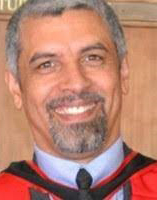
Denzil R. Beukes is an Associate Professor of Pharmaceutical Chemistry and Deputy Director in the School of Pharmacy, University of the Western Cape.
Denzil obtained his BSc, BSc Hons and PhD (2000) degrees in Organic Chemistry from Rhodes University. He was appointed as lecturer in Pharmaceutical Chemistry in the Faculty of Pharmacy, Rhodes University in 2000 and promoted to senior lecturer in 2008. In 2014 he was appointed as Associate Professor in the School of Pharmacy (UWC).
Denzil’s PhD research, done under the supervision of Prof Michael Davies-Coleman, was focused on structural and synthetic investigations of South African marine natural products. He is still passionate about natural products research and is currently involved in studies of marine, terrestrial and microbial natural products.
Commonwealth Chemistry
Voting for the first Commonwealth Chemistry elections has now closed. I would like to thank all the Society Members for taking part and voting in the elections over the last 2 weeks.
I would also like to thank all the candidates for both the positions of President-Elect and Members of the Executive Board.
The final results have determined that our next President-Elect will be:
-
Neil Coville, South Africa
Our two new Elected Executive Board Members will be:
-
Naumih Noah, Kenya
-
Ting Kueh Soon, Malaysia
Congratulations to all three candidates and I look forward to working with you over the coming year to advance further the work of Commonwealth Chemistry.
All three will begin their terms of office as members of the Executive Board at the Commonwealth Chemistry Annual General Meeting (AGM) on 19 May 2022.
The full results of the final round were as follows:
President-Elect
-
Neil Coville – 70%
-
Deborah Nicoll-Griffith – 30%
Elected Executive Board Members:
-
Naumih Noah – 49%
-
Ting Kueh Soon – 29%
-
Sandeep Verma – 22%
If you have any questions or require more information, please do get in touch with the Secretariat and they will be very happy to help.
With best regards
Dr Vicki Gardiner, President, Commonwealth Chemistry
We congratulate Professor Coville on his election as President-Elect of Commonwealth Chemistry! It is a great honour for SACI to have one of its members at the helm of this new organisation.
-
Activities of Commonwealth Chemistry
Commonwealth Chemistry published its report on the needs, challenges and opportunities for Commonwealth based early career chemists (ECCs): ‘A Sustainable Chemistry Workforce for a Sustainable Future – Unlocking the potential of early career chemists across the Commonwealth’. The key findings were presented at the Special General Meeting in November 2021 and a Working Group was formed to progress the recommendations and commitments outlined in the report. The full report is available on the Commonwealth Chemistry website.
An event to mark Commonwealth Day was organised on 14 March 2022. The findings and recommendations of the Sustainable Chemistry Workforce report were shared and discussed by members of the Report Working Group and early career chemist panellists. Attendees were invited to contribute to the setting up of an early career network for the Commonwealth. The event was followed by a webinar on how to publish scientific articles.
The 2nd AGM took place on 19 May 2022. At this AGM, newly appointed and elected board members joined the Commonwealth Chemistry Executive Board, including the President-Elect who will accede to President at the AGM in 2023.
Launch of the Elements social media campaign
Working with a strategic marketing agency based in the UK, Commonwealth Chemistry will launch a social media campaign showcasing chemists across the Commonwealth to bring all the ‘elements’ of Commonwealth Chemistry together in a celebratory video campaign.
Launch of the Commonwealth Chemistry newsletter
The website was launched in April 2021 with content introducing the Federation, news articles, event information and resources. Users of the website are able to register at www.commonwealthchemistry.org and upload their own content. This content, along with updates from the Executive Board and Secretariat, will be used to create a newsletter that will be distributed to members and individuals registered via the website.
3rd Commonwealth Chemistry Posters
This annual event will take place once again on 28–29 September 2022.
2nd Commonwealth Chemistry Congress (CCC)
The second Congress will take place in St Augustine, Trinidad & Tobago, on 23–25 May 2023 with a new cohort of ECCs from across the Commonwealth.
The 3rd AGM will take place in May 2023 during the Congress. At this AGM, newly appointed and elected board members will join the Commonwealth Chemistry Executive Board and the President-Elect will accede to President.
-
Commonwealth Chemistry and Chemistry World

Dear Colleagues
In June 2020 the Commonwealth Chemistry Executive Board accepted the offer from the Royal Society of Chemistry and introduced a scheme to allow free, unlimited access to the Chemistry World website throughout 2020.
Today, we are delighted to announce that we are extending this scheme to 31 December 2021 for all members of commonwealth chemical societies. This provides another year of free, unlimited access to the Chemistry World website for all those who wish to participate.
The access provided under the scheme would normally only be available to paying subscribers and members of the Royal Society of Chemistry. It includes:
over 16,000 archived articles spanning more than a decade of coverage
over 150 new articles, videos and podcasts published each month
personalised emails to alert you when stories of interest are published
We encourage everyone to take advantage of this scheme, so please pass this message onto your members:
What is Chemistry World?
Chemistry World is the flagship magazine of the Royal Society of Chemistry, available online at www.chemistryworld.com. It publishes a wide range of content covering the latest research, new and views from across the global chemical sciences community. There is an extensive archive of over 16,000 articles online and more than 150 new articles, podcasts, webinars and videos are published each month.
How do I claim my free access?
By being a member of your national chemical society, you can have access to Chemistry World online. Simply visit https://www.chemistryworld.com/commonwealth-chemistry and follow the instructions on screen.
With best wishes
Dr Vicki Gardiner
President Elect, Commonwealth Chemistry
-
New research shows early career chemists are being held back across the Commonwealth
Commonwealth Chemistry, a federation of chemical science societies which SACI is a member of, has published a new report on the challenges faced by chemists at the early stages of their careers.
They surveyed early career chemists from across the Commonwealth and ran a series of focus groups. Their findings reinforce the importance of chemists for a sustainable future – nine in ten of those who took part are working on topics related to the UN Sustainable Development Goals.
However, early career chemists are being held back by a range of factors, including a lack of promotion opportunities, mentoring and support; limited access to equipment and consumables; difficulty getting funding for research; and a lack of confidence in certain non-technical skills such as writing grant applications and getting scientific papers published.
Overall, early career chemists in low and middle income countries face bigger hurdles than their peers in high income countries, and women face greater challenges than men. This is something that must be addressed. Equality for all is one of the central pillars of the Commonwealth and of Commonwealth Chemistry.
Early career chemists also face barriers to collaborating with colleagues across the Commonwealth. While many are collaborating with scientists in other countries, a lack of funding for travel and networking opportunities limits their ability to do so, particularly for those in low and middle income countries.
Commonwealth Chemistry has made a series of commitments to support early career chemists:
• Setting up a Commonwealth Chemistry Early Career Network.
• Increasing access to professional development opportunities, training and careers advice for early career chemists
• Championing equality in chemistry and encouraging chemical science organisations to take access to improve inclusion and diversity.
• Facilitating knowledge sharing across the Commonwealth, including providing free online access to Chemistry World for members of chemical societies that are part of Commonwealth Chemistry.
At SACI, we are using this report to engage with those who can help address these barriers in our country, including funders, universities and employers of chemical scientists.
Read the full report A Sustainable Chemistry Workforce for a Sustainable Future, online here: https://commonwealthchemistry.org/resource/report-sustainable-chemistry-workforce
RSC News
Royal Society of Chemistry Events Website
Our website can be used to advertise events from across the world - not just those organised by the Royal Society of Chemistry, www.rsc.org/events/africa.
So, if you need a simple website for your event, or want to reach a wider audience, then please submit your event to our website. Simply click on this link and follow the instructions: www.rsc.org/events/submitevent
SACNASP
Dear SACI Members
SACI would like to introduce to you SACNASP (South African Council for Natural Scientific Professions), which was established in terms of section 2 of the Natural Scientific Professions Act (NSP), No. 27 of 2003, as amended, https://www.gov.za/documents/natural-scientific-professions-act-0. SACNASP is a statuary body, with the primary role of registering and regulating natural scientific professionals in terms of the NSP Act.
Last year SAQA had to withdraw the Professional Chemist (Pr.Chem.SA) designation (issued via SACI), due to legal issues with SACNASP. Hence, SACI encourage our members to register as professional scientists in the Chemical Sciences, with SACNASP. There are 3 membership categories, namely:
(a) professional natural scientist – this membership category is the replacement for the former SAQA SA Professional Chemist;
(b) candidate natural scientist; and
(c) certificated natural scientist
Details of the requirements for registration can be found on the SACNASP web page: https://www.sacnasp.org.za/requirements-for-registration.
SACI has a Memorandum Agreement with SACNASP for mentoring of Chemists in a Career Development Program (CDP), i.e. a mentoring program is now available for SACI members requiring only one more year of relevant work experience, in accordance with the Professional Natural Scientist registration guidelines (number of work experience years is dependent on qualification). Currently, SACI has two SACNASP sponsored positions available for Mentees.
If you would like to be part of this mentorship program, and you are a SACI member, please contact me at mrssuzefinney@gmail.com, for further details.
Please note that the CDP is an intensive program, which requires that you submit a portfolio of evidence for all requirements which must be met to be a registered Professional Natural Scientist. To maintain this registration, continual learning and development are required by SACNASP – please ensure that you are fully aware of the commitment required before applying.
Kind regards,
Suzanne Finney
SACI Executive Treasurer & Chairman Industrial Division
NSTF News
For the latest news see: http://www.nstf.org.za/news-category/nstf-news/
AYCN
NEW!! African Younger Chemists' Network (AYCN)
It is an exciting time to be an early-career chemist on the African continent - we are establishing the African Younger Chemists' Network (AYCN)! The need for a unifying "Afro-centric" early-career chemistry network is essential to showcase the unique talents and ideas from this region. AYCN’s vision is to promote and establish global standards for the empowerment of early-career chemists and to prepare them for a sustainable future with constructive engagements and collaborations with stakeholders from across the globe. It is the intention to establish the AYCN in collaboration with other major African and global chemistry societies.
The criteria:
This group will comprise African Early-Career Chemists (AECC) who are either under the age of 35 or who are within 5 years of their terminal degree.
The purpose of this group is to:
1) encourage networking and create a community among AECCs,
2) create a space for collaboration between emerging researchers,
3) to share opportunities, including funding calls, conferences, job listings and writing workshops,
4) to promote leadership and development of AECCs.
This form serves as an expression of interest. Please complete this form if you meet the criteria listed above, and are keen to join this group. You will then be invited to join us during this establishment phase of the AYCN where the group's activities will be discussed. To receive an invitation for this meeting, we need a completed form with your email address.
Attached please find the Google form link introducing the AYCN (African Younger Chemists' Network) and requesting for volunteers to populate the various subcommittees.
https://forms.gle/hVAM8UeEY57hjusPA
Form will be open until the end of the year.
Contact email: aycn.chemists@gmail.com
Contact people: Ms Bianca Davids, Dr Sadhna Mathura
IUPAC
For the latest IUPAC news see: http://www.saci.co.za/iupac.html
For a list of IUPAC sponsored events see: https://iupac.org/events/
IUPAC Concentrate | sample 2022-05-18
NEWS
|
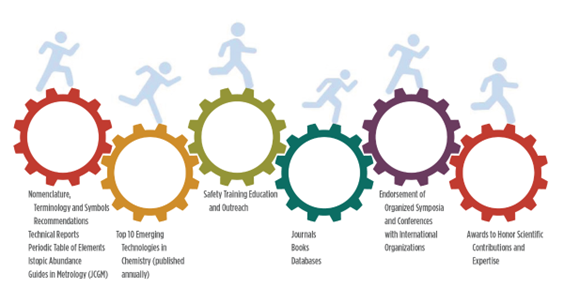
IUPAC’s activities span a wide range and contribute to the advancement of chemistry.
|
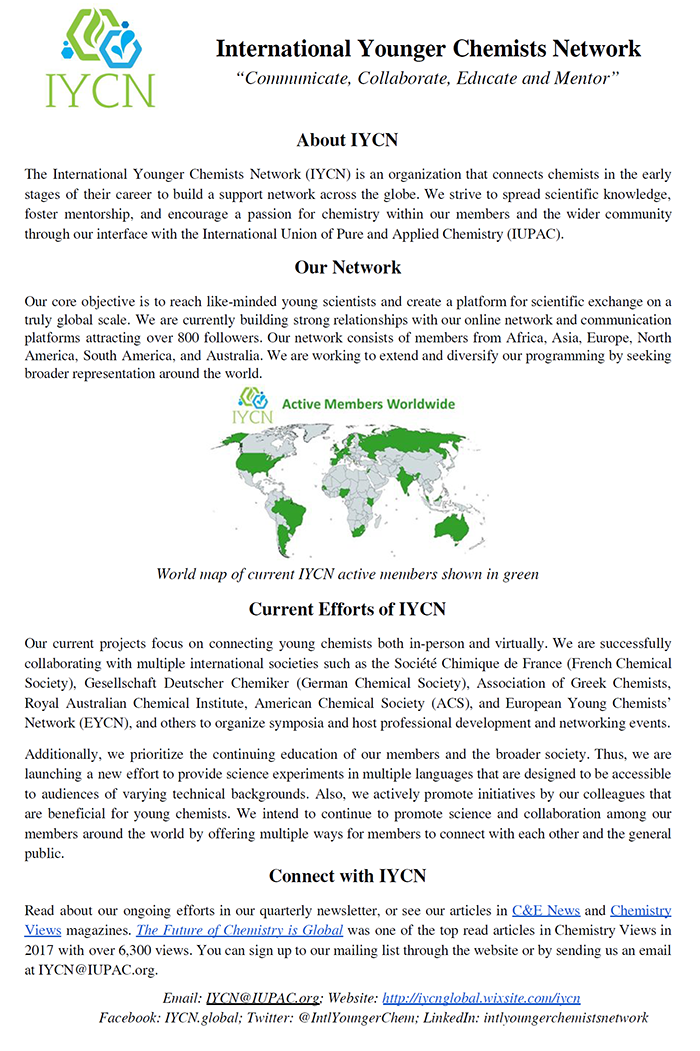
The representatives for South Africa on the International Younger Chemists Network for the period of 2021-2022 are:
Dr Mabuatsela V. Maphoru, a lecturer from Tshwane UoT, and
Ms Alida-Louise Henning, a senior scientist from Impala Platinum Ltd.
Website: IYCN
Twitter: @IntlYoungerChem
Facebook: @IYCN.global
LinkedIn: intlyoungerchemistsnetwork
Professional Development Skills:
The International Younger Chemists Network (IYCN; https://www.iycnglobal.com/), affiliated organization of the International Union of Pure and Applied Chemistry (IUPAC) is organizing a series of FREE live workshops devoted to support and empower early-career chemists with professional development skills to advance their careers.
Stephen O Aderinto: soaderinto1@sheffield.ac.uk
Post-graduate Summer School on Green Chemistry
-29.jpg)
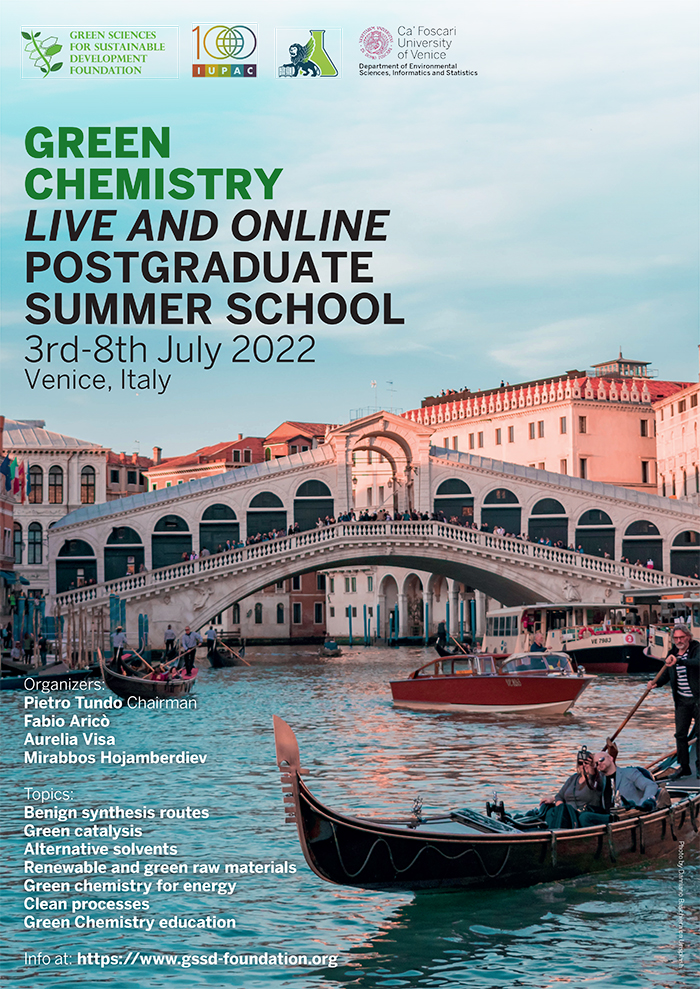
GREEN CHEMISTRY POSTGRADUATE SUMMER SCHOOL
3rd -9th of July 2021 Venice, Italy
https://gssd-foundation.org/ss2022/
Dear Students,
RE: Green Chemistry Postgraduate Summer School, Venice, 3rd to 9th of July 2022
This letter is sent to students who attended in previous Green Chemistry Summer Schools, Conferences, Workshops, Grants, and Awards, which we are aware of. This letter is particularly addressed to Students who are interested to apply for scholarships to attend this Summer School.
After one year, the scenario about green chemistry and Basic Sciences for Sustainable Development is much better defined. The International Year of Basic Sciences will start next June; we are working at this end with the same sprit from the first of the 14 summer school!
We are pleased to inform you that the Green Sciences for Sustainable Development Foundation (www.gssd-foundation.org), in collaboration with the IUPAC Interdivisional Committee on Green Chemistry for Sustainable Development ICGCSD (https://iupac.org/body/041), and the Ca’ Foscari University of Venice (www.unive.it), will organize the 14th Edition of the Post-graduate Summer School on Green Chemistry that will be held in-person and online from the 3rd to 9th of July 2022 in Venice, Italy. The Summer School not only offers lectures given by outstanding scientists but also provides a platform for postgraduate students to present their research work. Regardless of in-person and online attendance, we warmly invite and encourage you all to apply to obtain the scholarship. Information about application documents and their submission can be found here: https://gssd-foundation.org/how-to-apply/
Please note that 30 scholarships for in-person participation in Venice and 100 scholarships for virtual (remote online) participation have been secured last year 2021.
This year 2022 the number of scholarships shall be about 30; hoverer it can be increased by the generous support of our sponsors. Please note that we do no reimburse travel tickets.
Evaluation of the received applications will need some time for the Selection Committee (Members of IUPAC ICGCSD) and for you as well to consider how to come to Venice. On this regard, we would like to take a chance to remind you some of the criteria set for selecting outstanding participants: (i) to be fluent in English, (ii) to be under 35, (iii) your motivation to attend the Summer School and your CV, (iv) a letter of recommendation by your mentor, and (v) a photo of the applicant.
For further information, please refer to the dedicated website at the link (https://gssd- foundation.org/ss2022/).
Thank you very much for your interest in this Summer School.
We look forward to receiving your applications and welcoming you to our Summer School regardless of its delivery modality.
Best regards,
The Organizing Committee
14th 2022 Summer School on Green Chemistry
Venice, Italy
February 4, 2022
PS: We would kindly like to ask all professors, teachers, advisors, mentors, and tutors to share this information with their networks, colleagues, and students. It is highly appreciated.
If you have received a similar letter, please ignore this one.
E-mail: green.chemistry@unive.it
Facebook: https://www.facebook.com/greenchemvenice2020/
Twitter: https://twitter.com/greenchemsummer
Instagram: https://www.instagram.com/greenchemsummer/
Green Chemistry Postgraduate Summer School, Venice, 3rd to 9th of July 2022
FASC News
ABC Chem Conference 2022
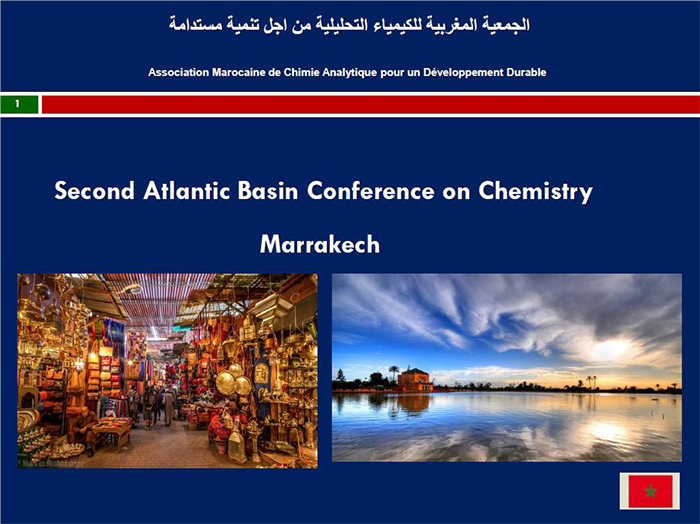
This event will be held at the Palais des Congrأ╟s ق│ôMarrakech, Morocco in December 2022. آFASC will be hosting the event. آPlease diarise the date.
We are hoping to have an excellent turnout from member countries at this event. More information will be made available in the months ahead.
Registration will open in June 2022.
For further details see: https://abcchem.org/
Global Young Academy of Science
Over the last few months, the Global Young Academy of Science (GYA) members, alumni and Office staff have worked together with writers and editors from the BBC StoryWorks and the International Science Council (ISC) on an article featuring the work of the GYA At-Risk Scholars Initiative.
Today GYA is delighted to share news that the newly-launched multimedia hub #UnlockingScience is now live. You can visit the hub and check out our article “The scientific knowledge being lost to conflict” here: council.science/UnlockingScience
In addition to the At-Risk Science Initiative article, the hub features short films, audio-visual stories and a podcast exploring what science is doing to address the challenges of global sustainability.
CAIA Newsletter
The latest issue of CAIA news is available. Go to: http://www.caia.co.za/news/chemnews/
or e-mail: caia@iafrica.com for pdf files of news and information.
New Chemistry Textbook
One of our long-standing SACI members, Vic Soffiantini has written a new chemistry textbook specifically for technical universities and training colleges.آ The details follow:
Soffiantini, Victor Angelo. Analytical Chemistry: Principles and Practice, Berlin, Boston: De Gruyter, 2021. https://doi.org/10.1515/9783110721201
Book on Green Chemistry
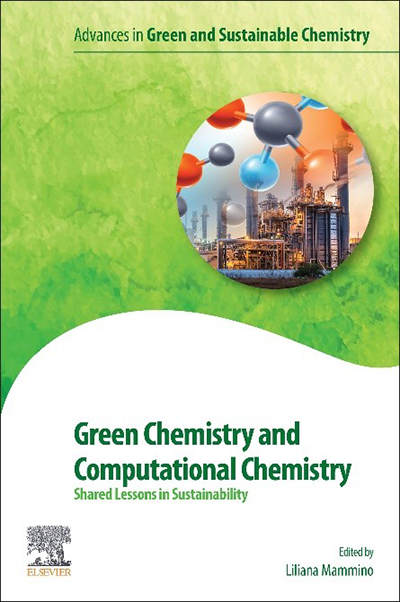
Dr Liliana Mammino, University of Venda, South Africa is the editor and contributor to a book on ‘Advances in Green Chemistry and Sustainability’.
Paperback ISBN: 9780128198797
eBook ISBN: 9780323851824
Special issue of the Philosophical Transactions of the Royal Society A
PHILOSOPHICAL TRANSACTIONS OF THE ROYAL SOCIETY A
MATHEMATICAL, PHYSICAL AND ENGINEERING SCIENCES
Developing resilient energy systems
Published 28 February 2022. Available online and in print.
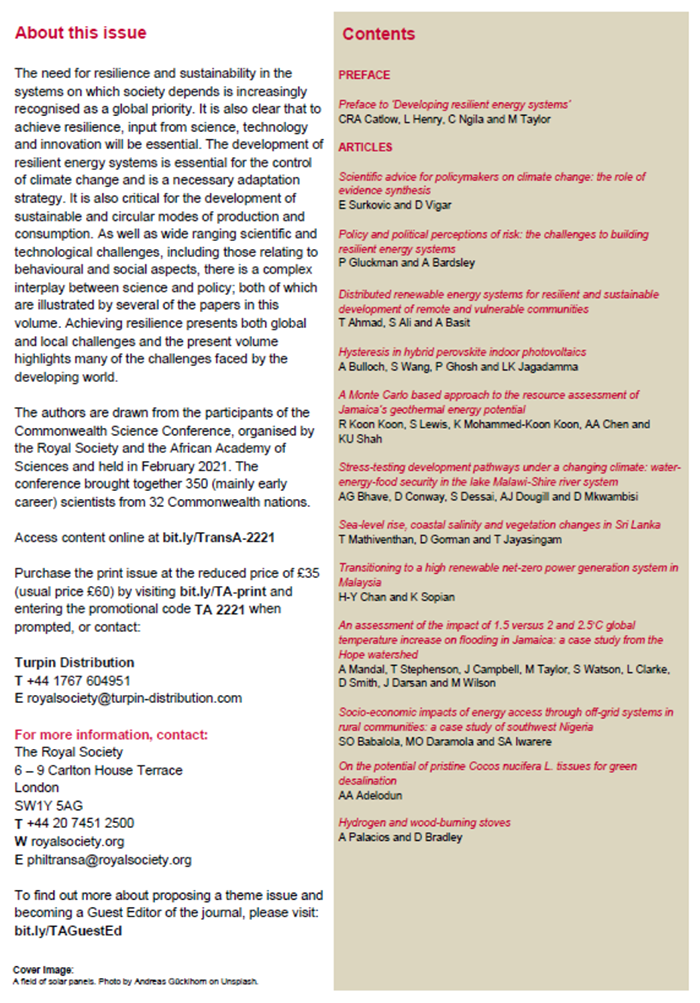
Royal Society Publishing has recently published a special issue of Philosophical Transactions A entitled Developing resilient energy systems compiled and edited by Richard Catlow, Legena Henry, Catherine Ngila and Michael Taylor and the articles can be accessed directly at www.bit.ly/TransA-2221
Purchase the print issue at the reduced price of £35 by contacting lucy.white@royalsociety.org.
Royal Society Publishing are also looking for new theme issues and that if you are interested in submitting, please visit the website https://royalsocietypublishing.org/rsta/guest-editors or contact the Editorial Office for more information - philtransa@royalsociety.org.
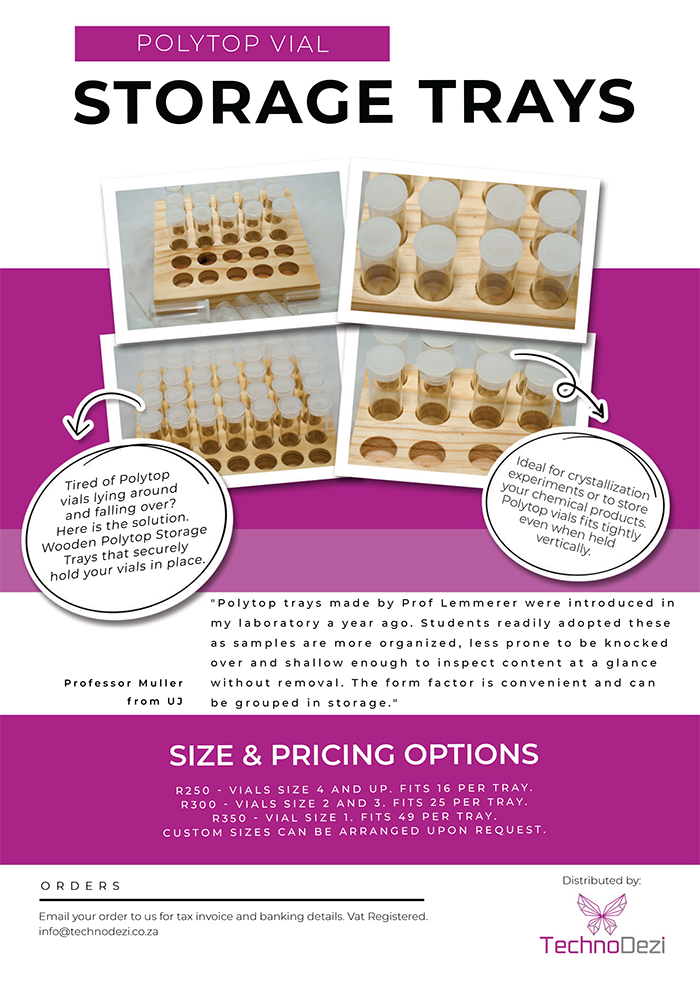
Polytop Vial Storage Trays for Sale
South African Journal of Chemistry
The South Journal of Chemistry is now 103 years old and we are pleased to note that the impact factor of the Journal is now 1.2 (and has a CiteScore of 2.2).
We encourage all SACI members to submit manuscripts to the Journal. Journal submission details can be found at http://saci.co.za/journal.
Details of the journal and the editors can be seen at http://www.journals.co.za/sajchem/.
All manuscripts since 1918 are electronically available online at
http://journals.co.za/content/journal/chem/browse?page=previous-issues
This Journal is published electronically. The webpage is: http://www.saci.co.za/. The South African Journal of Chemistry, published by the South African Chemical Institute, has been publishing high quality papers, in all fields of Chemistry for over 100 years. The Journal went fully electronic in 2000 and is freely available through open access online (http://reference.sabinet.co.za/sa_epublication/chem). It is a CAS-abstracted publication and is listed in Current Web Contents. It is also part of the Scielo group. It has retained its status as an accredited publication with the South African Department of Higher Education and Training.
We encourage South African chemists to publish in the journal!
African Journals of Chemistry
African Corrosion Journal (online). Commenced in 2015 ظ╤ق╛─éظ╥éعéق╛آéô a peer reviewed corrosion journal. This journal may be of interest to the “practical” chemists amongst the SACI membership. https://view.publitas.com/icp-1/african-corrosion-journal
African Journal of Chemical Education
Enquiries and manuscripts should be addressed to the Editor-in-Chief: email eic@faschem.org, PO Box 2305, Addis Ababa, Ethiopia. AJCE, 2016, 6(1) ISSN 2227-5835 The online version appears in the FASC website (www.faschem.org) and in the AJOL website (www.ajol.info)
Papers on any aspect of Chemistry Education such as teaching organic, analytical, physical, inorganic, polymer, green, climate change/environmental chemistry, ICT in chemistry and chemistry curricula as well as assessment in chemistry are acceptable for publication. We also encourage issues on chemistry and indigenous knowledge/practice, chemical safety, natural products and related areas.
Nanonews in South Africa
SAASTA newsletter. nanonews@npep.co.za. Prof Janice Limon, NPEP Nano News Editor
South African Journal of Science
TOC@assaf.org.za
Journal of the Chemical Society of Nigeria
csnjournals@gmail.com; csnjournals@yahoo.com; editor@chemsocnigeria.org
Bulletin of the Chemical Society of Ethiopia
http://www.ajol.info/index.php/bcse/index
South African Journal of Chemical Engineering
A fully open access journal , all authors can publish their papers on an open access basis in the South African Journal of Chemical Engineering at the reduced rate of $400 (USD).
http://www.journals.elsevier.com/south-african-journal-of-chemical-engineering/
Journal of the Kenya Chemical Society (JKCS)
This is a peer-reviewed multi-disciplinary chemistry journal published by the Kenya Chemical Society (KCS). JKCS publishes findings from all areas of chemistry including organic, inorganic, physical, analytical, materials chemistry and nanoscience, computational chemistry and environmental chemistry. JKCS also publishes reviews in all areas of chemistry. Published articles are available at
https://kenyachemicalsociety.org/journals.
Manuscripts should be submitted to the Editor-in-Chief at eic.jkcs@gmail.com for processing and peer-review.
Chemistry Africa
A Journal of the Tunisian Chemical Society
https://www.springer.com/chemistry/journal/42250?utm_source=hybris&utm_medium=e mail&utm_content=internal&utm_campaign=JFTT_2_aww_2018newjournals
Journal of the Mauritanian Chemical Society (JMCS)
Publishes research articles and conference proceedings in English or French.
This is published online at: http://www.scmauritania.org/journal-scm;
M A Sanhoury, JMCS Coordination Editor
Chemistry Africa
A Journal of the Tunisian Chemical Society
https://www.springer.com/chemistry/journal/42250?utm_source=hybris&utm_medium=e mail&utm_content=internal&utm_campaign=JFTT_2_aww_2018newjournals
Journal of the Mauritanian Chemical Society (JMCS)
Publishes research articles and conference proceedings in English or French. This is published online at: http://www.scmauritania.org/journal-scm; M A Sanhoury, JMCS Coordination Editor
Scientific African
Published by the Next Einstein Forum in collaboration with Elsevier.
https://www.journals.elsevier.com/scientific-african
SACI and SACI related Conference events
-
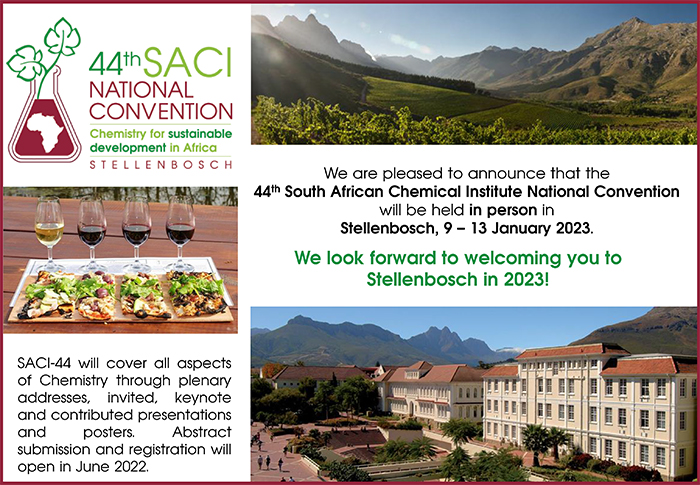
44th National Convention of the South African Chemical Institute
We are excited to announce that the 44th SACI National Convention will be held in Stellenbosch, 9-13 January 2023. We look forward to your participation in this in-person event!
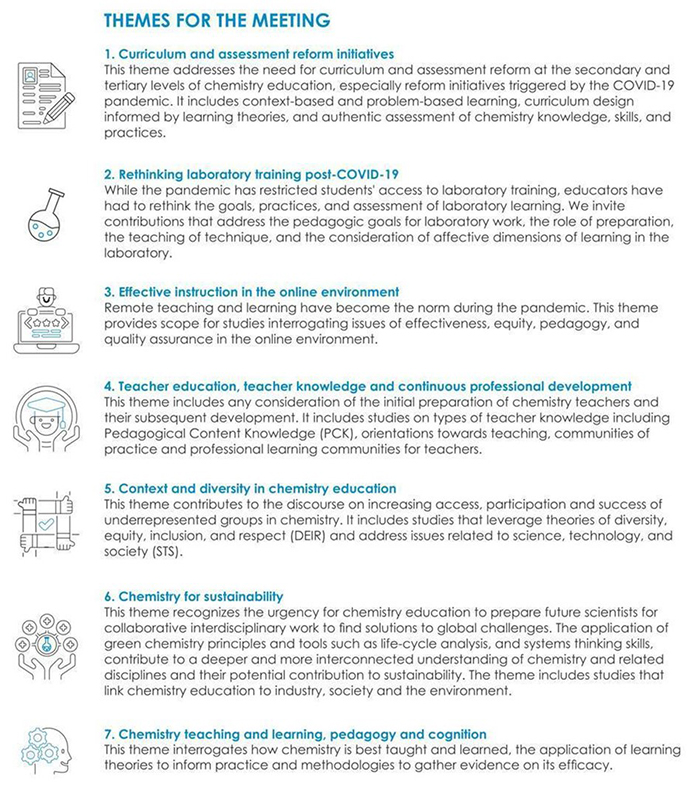
26th IUPAC International Conference on Chemistry Education (ICCE), 18-22 July 2022, Cape Town, South Africa
Good day,
With only two months to go, we are making excellent progress with preparations for ICCE 2022 in Cape Town. We are so excited that this conference is finally taking place after two years of waiting! We have processed the first round of abstract submissions and can confirm that the programme will contain many exciting and varied presentations. Cape Town, one of the most beautiful cities in the world, is waiting to welcome you with its many attractions.
We have, however, had inquiries about the state of COVID in South Africa. For authoritative information, you can consult the local statistics page (https://sacoronavirus.co.za/). By and large, we are living normal lives, similar to Europe and the USA. Just under 50% of the adult population is fully vaccinated and there is a high level of immunity in the population due to a combination of previous infection and vaccination. The state of disaster declared by the government in March 2020 was ended in April 2022. Certain regulations remain such as the wearing of masks indoors and limitation of capacity in large indoor venues. Teaching and learning in schools have returned to normal. We would thus confidently say that if you take a few common-sense precautions, you will be able to enjoy all the wonders of the city of Cape Town. We also encourage you to plan a longer stay to enjoy some of the other exciting experiences the rest of South Africa has to offer. If you have not yet submitted an abstract for the conference, please do so soon. The deadline for the final round of submissions is 18 May (extended). We look forward to meeting you in Cape Town!
Please visit the website to submit your abstract and register https://icce2022.org.za/
Kind Regards
The Local Organising Committee, ICCE 2022
Secretariat office: Tel +27 21 9101913 / email: icce2022@allevents.co.za
Other Conferences
https://www.saci.co.za/other_events.html
CATSA 2022
.jpg)
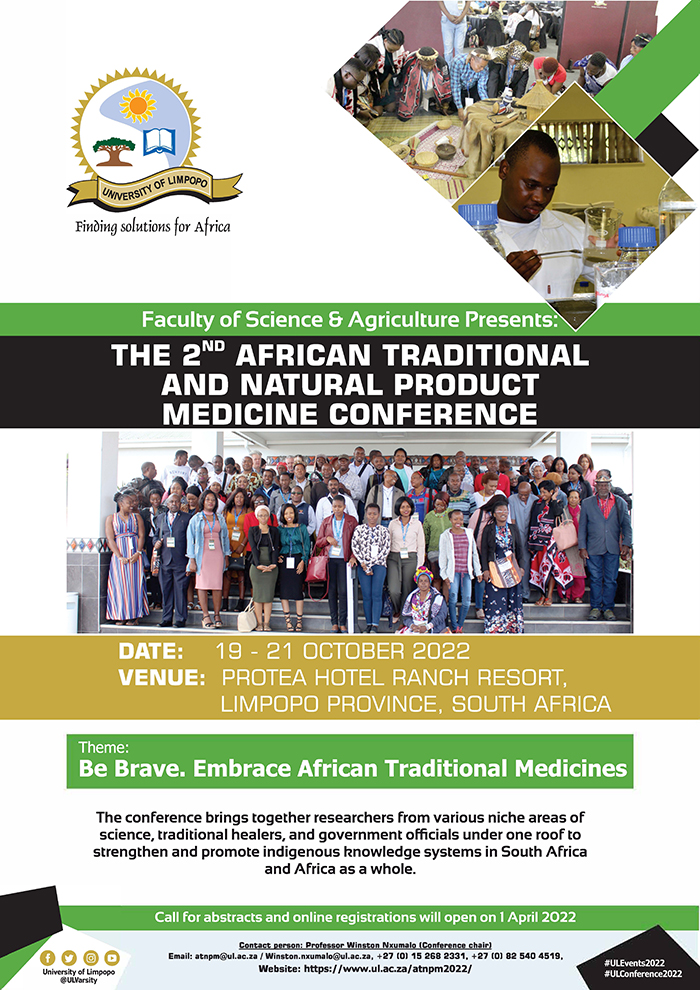
2ND AFRICAN TRADITIONAL AND NATURAL PRODUCT MEDICINE CONFERENCE
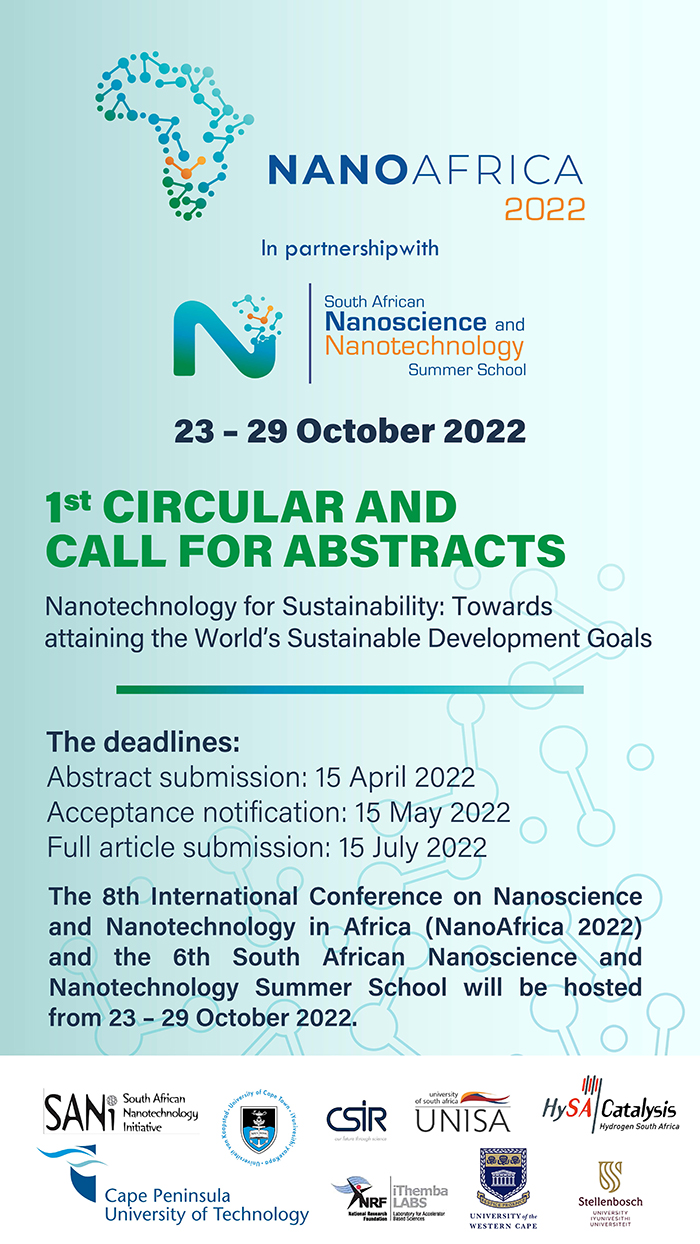
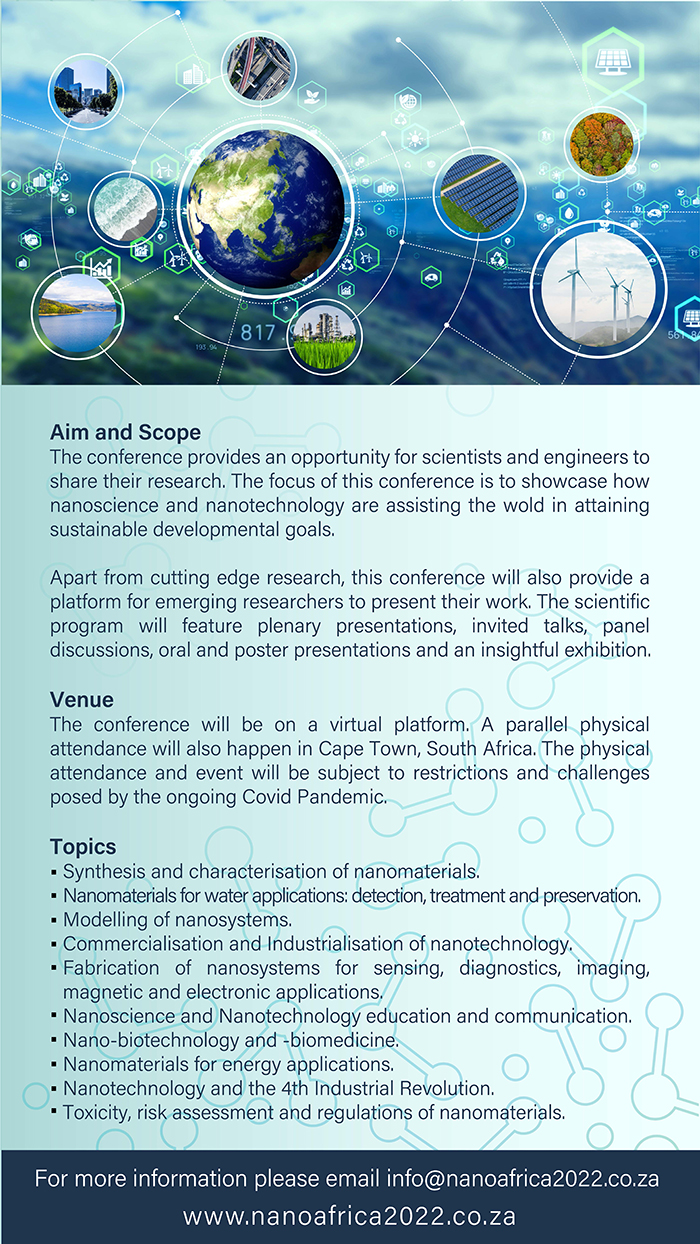
NANO AFRICA 2022
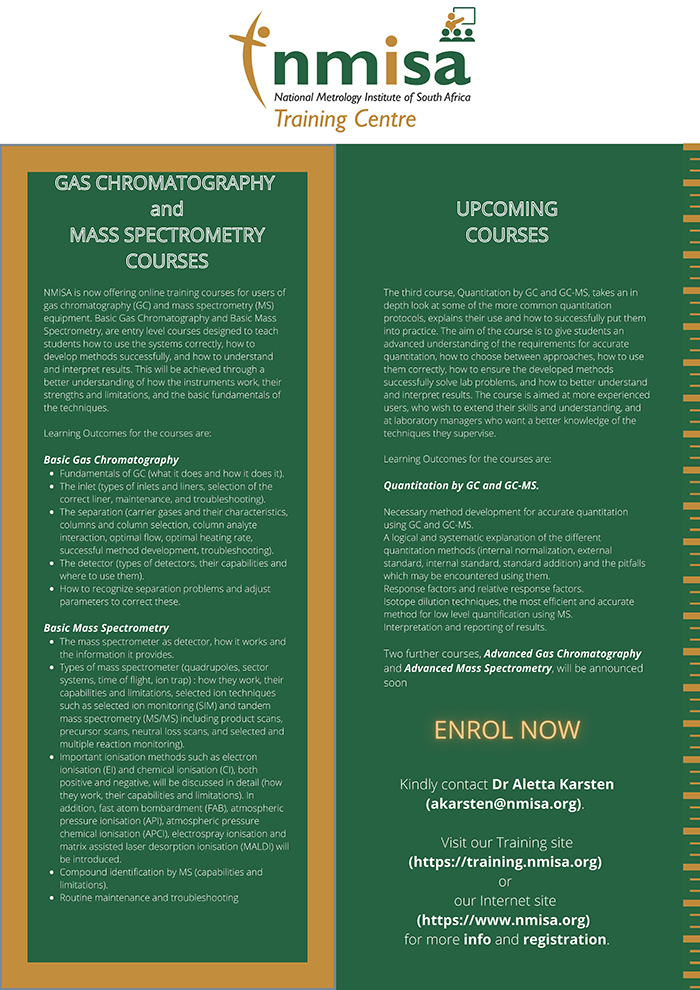
GC and GC-MS online training courses - NMISA
Vacancies
Please see: https://www.saci.co.za/vacansies.html
< contentntentcontentcontentcontentcontentcontent

